Hello, I am Elena. You might think creating a luxurious bathroom requires a massive renovation budget. However, simply upgrading key bathroom fixtures like showers and adding sustainable accessories can completely transform your space. This approach saves thousands of dollars while instantly elevating both daily functionality and overall aesthetics.
Why expensive bathroom renovations are a waste of money
There is a pervasive myth in the interior design world that you need to completely gut a space to make it feel luxurious. Television shows and home improvement magazines constantly push the idea of ripping out tiles, moving plumbing, and spending tens of thousands of dollars. I completely disagree with this mainstream narrative. Through my years of upcycling and designing, I have learned that expensive bathroom renovations are often a massive waste of money, especially when you are renting or living on a student budget. The truth is, human perception of quality relies heavily on touchpoints.
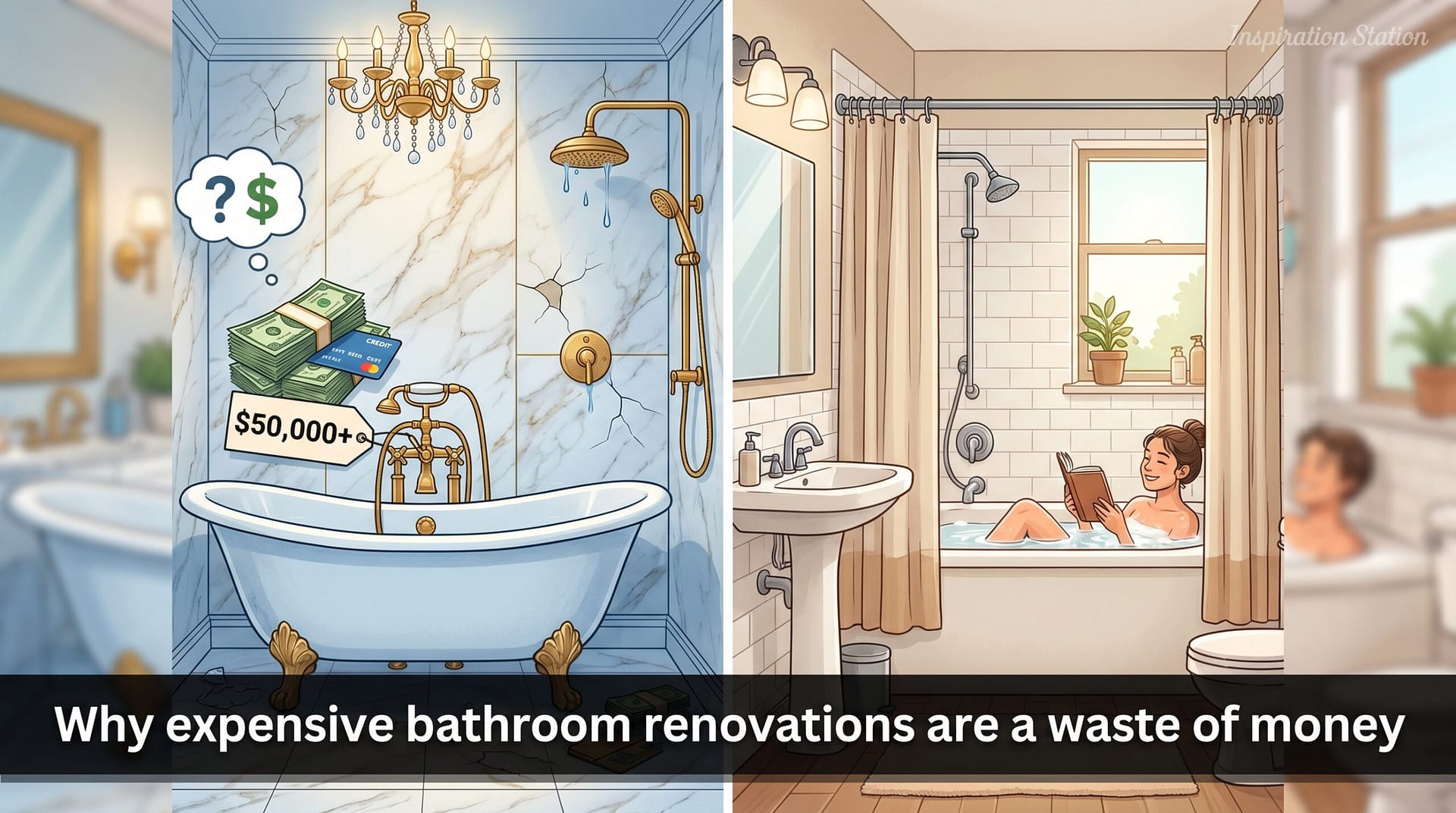
When you walk into a bathroom, what do you actually interact with? You touch the faucet, you look in the mirror, and you stand under the water. By simply changing out bathroom fixtures and accessories, you alter the entire sensory experience of the room. In 2026, we are seeing a massive shift toward sustainable, modular upgrades rather than demolition. Landfills are full of perfectly good ceramic tubs and sinks that were destroyed just because they were an outdated color. Instead of tearing everything down, the smart approach is to layer modern, high-quality elements over the existing foundation.
For college students, the idea of a renovation is completely out of the question due to strict lease agreements and limited funds. But this limitation is actually a creative blessing. By focusing our attention entirely on removable, high-impact items, we can create a stunning modern minimalist design that you can actually pack up and take with you when you graduate. It challenges the belief that luxury is permanent and expensive, proving instead that luxury is adaptable and accessible.
Assessing the reality of student apartment bathroom fixtures
Let us look at a recent case study. A few months ago, a university student named Maya reached out to me. She was feeling incredibly depressed about her off-campus apartment bathroom. Like most student rentals, it featured peeling linoleum floors, harsh fluorescent lighting, and a rusty, calcified showerhead that barely produced a trickle of water. The space was purely utilitarian, completely lacking any comfort or style. To fix this, we first needed to assess the current state of the fixtures to determine what was actually salvageable and what was actively ruining her daily routine.
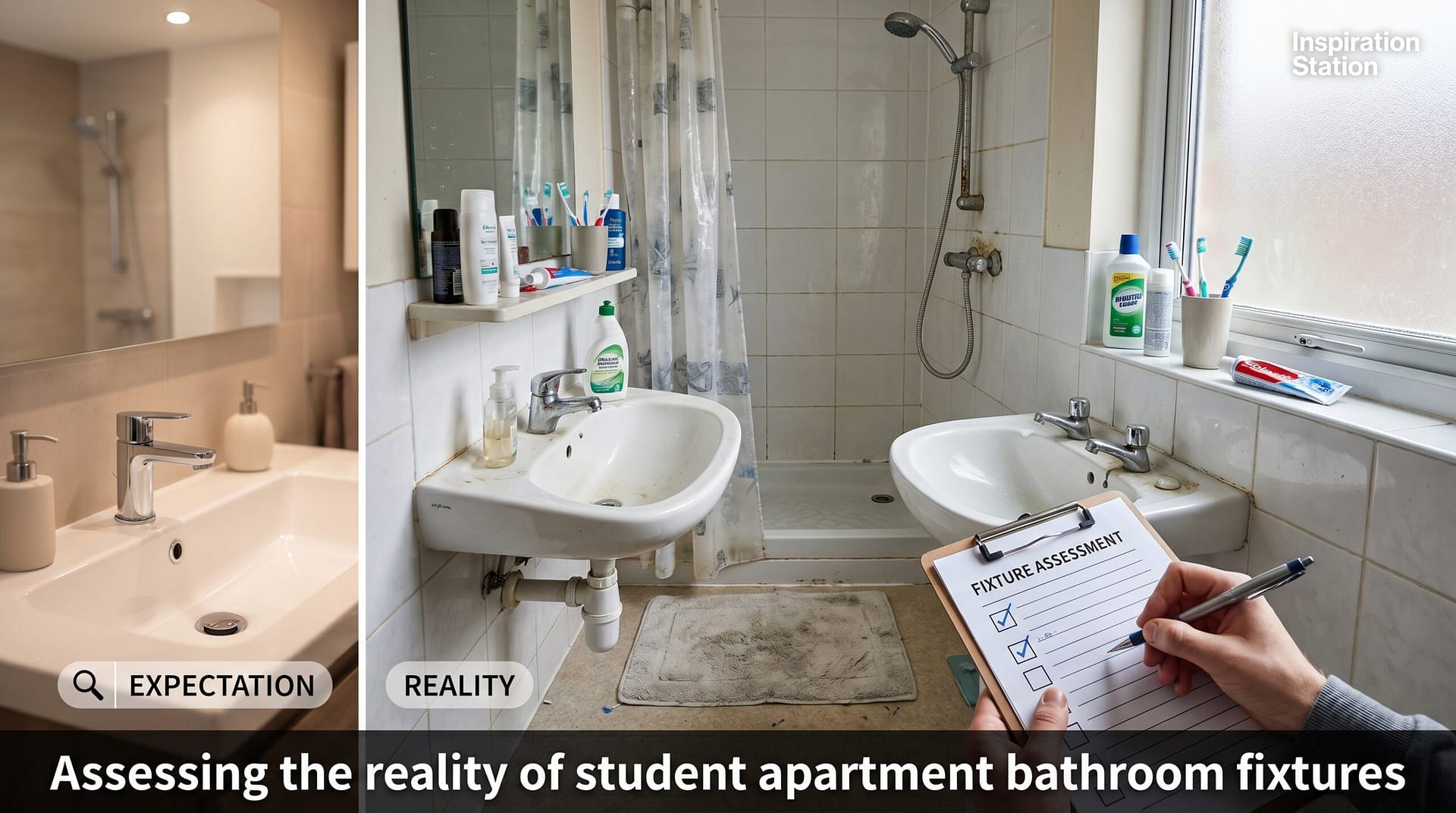
We started by looking at the water situation. The standard building-grade fixtures were incredibly wasteful. Older apartments often feature outdated plumbing components that use excessive amounts of water without delivering adequate pressure. This is not just a comfort issue; it directly impacts the monthly utility bills. Maya was paying a premium for water heating, yet she was shivering through weak, unsatisfying showers every single morning. We realized that by making a targeted upgrade, we could improve her comfort while simultaneously reducing her monthly living expenses.
“According to the Global Water Conservation Board in 2026, upgrading to modern aerated bathroom fixtures can reduce household water consumption by up to 40 percent without sacrificing water pressure.”
Beyond the plumbing, the existing accessories were dismal. The towel rack was a flimsy plastic bar hanging loosely from the drywall, and the only storage was a rusty wire caddy hanging off the shower neck. I knew immediately that using my practical carpentry skills to create some custom upcycled shelving would completely change the visual dynamics of the room. We created a plan to target the most crucial touchpoints: the water delivery system, the storage, and the lighting.
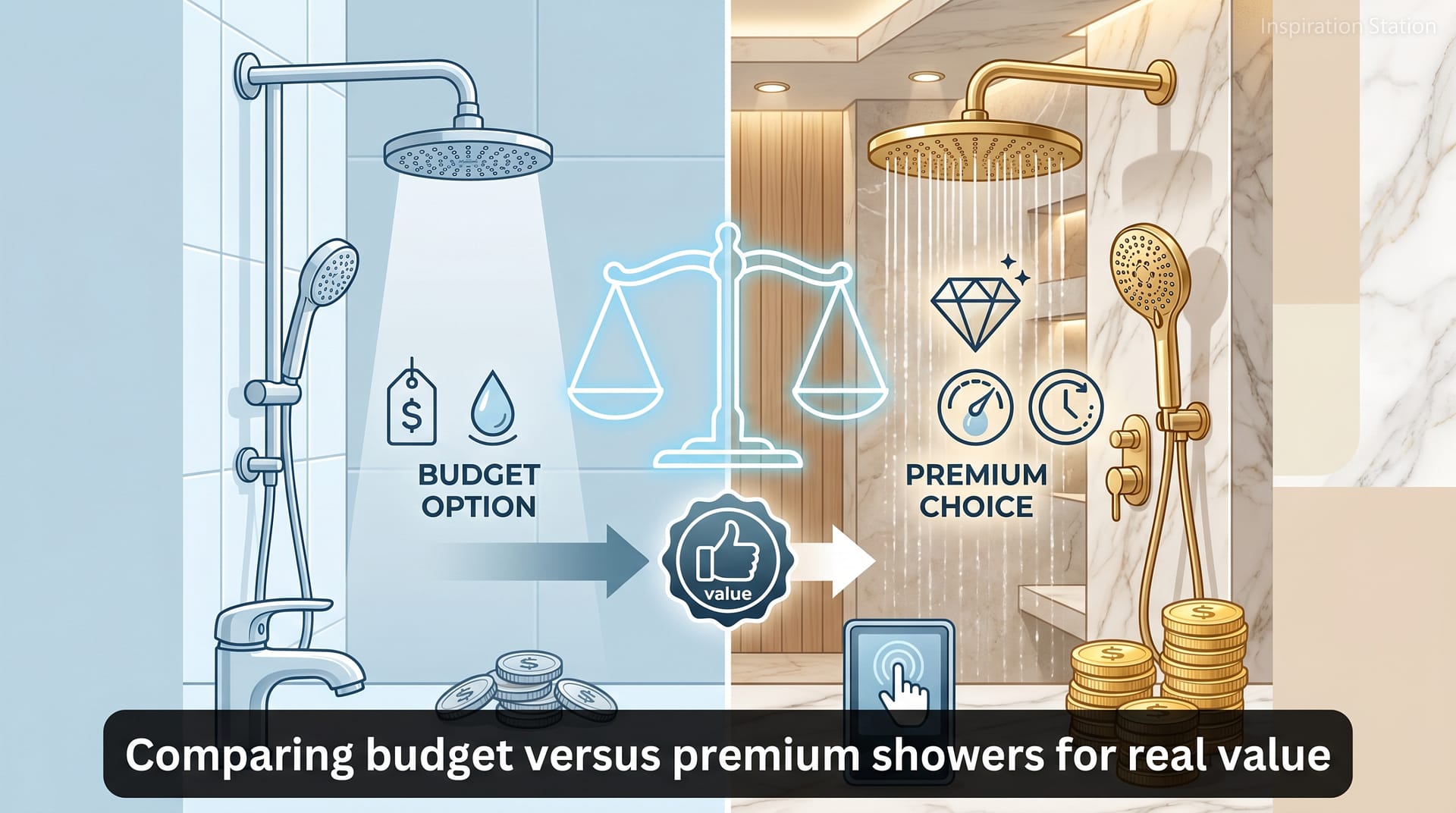
Comparing budget versus premium showers for real value
When it came time to select the new hardware, I wanted Maya to understand the market so she could make an informed decision. As a designer, I constantly compare products to find the perfect intersection of price and performance. The market in 2026 is flooded with options, but they generally fall into three distinct categories. We went shopping to evaluate these choices side-by-side to see what would provide the best value for a student budget.
The basic hardware store replacement
First, we looked at the cheapest option: a basic plastic showerhead available at any local hardware store. Priced around $15, it is incredibly tempting for a tight budget. However, upon closer inspection, the build quality is lacking. These units are prone to leaking, they lack modern water-saving aeration technology, and the chrome-painted plastic tends to chip within a few months. While the upfront cost is incredibly low, the long-term value is practically non-existent, and it does absolutely nothing to elevate the aesthetic of the space.
The high end smart digital system
Next, we examined the opposite end of the spectrum: a premium smart shower system. These units, retailing for $250 or more, feature digital temperature control, Bluetooth speakers, and customizable spray patterns via a smartphone app. While the technology is undeniably impressive, they often require permanent installation, complicated wiring, and sometimes even plumbing modifications. For a student renter, this is a terrible investment. You risk losing your security deposit, and the features are largely unnecessary for a standard daily routine.
The mid range eco friendly aerator
Finally, we found the sweet spot. We examined a mid-range, eco-friendly aerating showerhead priced around $45. This fixture is constructed from solid brass with a matte black finish, offering a sleek, modern look. It utilizes advanced 2026 air-injection technology, which mixes air with the water droplets to create a high-pressure feel while using 30% less water. This was the clear winner. It provided the luxurious spa aesthetic Maya wanted, it was easy to install without tools, and the water savings would literally pay for the fixture within the first four months of use.
Step by step guide to upgrading your rental bathroom safely
Once we purchased the perfect mid-range fixture, it was time for the installation. Many renters are terrified of touching plumbing, fearing they will cause a massive flood or face the wrath of their landlord. However, changing external fixtures is an incredibly simple piece of sustainable home improvement that anyone can master. Here is the exact process I walked Maya through to ensure a safe, leak-free upgrade.
- Gather the essential tools: You only need an adjustable wrench, a microfiber cloth, and a small roll of Teflon tape (plumber’s tape).
- Remove the old fixture: Wrap the microfiber cloth around the existing shower arm connector to prevent scratching it. Use the adjustable wrench to gently loosen the old head by turning it counterclockwise.
- Clean the threads: Once the old unit is off, use an old toothbrush to scrub away any mineral deposits, rust, or old crusty tape from the metal threads extending from the wall.
- Apply new Teflon tape: Wrap the new Teflon tape tightly around the clean threads in a clockwise direction. Three to four wraps are sufficient to ensure a watertight seal.
- Install the new upgrade: Hand-tighten your new eco-friendly fixture onto the taped threads. Once it is hand-tight, give it one final gentle quarter-turn with the wrench. Do not over-tighten, as this can crack the plastic washers inside.
The most crucial step for any renter is to thoroughly dry the old, ugly fixture we just removed, place it in a clearly labeled ziplock bag, and store it safely under the sink. When Maya’s lease ends, she will simply reverse these steps, put the original hardware back, and take her beautiful matte black fixture to her next apartment. This ensures she keeps her full security deposit intact while enjoying a premium experience right now.
Maximizing aesthetics with sustainable accessories on a budget
With the water situation resolved, we turned our attention to the overall environment. A bathroom is more than just plumbing; it is a space where you start and end your day. To complement the new matte black hardware, we needed to address the lack of storage and the sterile atmosphere. Since my background heavily involves upcycling vintage furniture, I brought over some scrap wood from a previous carpentry project to create a custom shelving unit.
We took old oak floorboards, sanded them down to reveal the beautiful natural grain, and sealed them with a water-resistant marine varnish. Using heavy-duty, damage-free adhesive strips—which have advanced incredibly by 2026 and can now hold up to 20 pounds safely—we mounted these rustic shelves above the toilet. This instantly added warmth to the cold, tiled room. We utilized these shelves to store rolled-up plush towels, instantly giving the room a high end hotel vibe without spending any money on new materials.
Next, we swapped out the cheap plastic towel bars for upcycled brass pipe fittings. We found these at a local architectural salvage yard for less than five dollars. After a quick polish, they looked like expensive designer pieces. Finally, we addressed the harsh lighting by adding a small, battery-operated warm-toned LED lamp on the vanity. The combination of the sleek new water fixture, the warm wooden textures, and the soft lighting completely transformed the entire visual environment of the bathroom.
Final thoughts on achieving affordable luxury in small spaces
Looking at Maya’s completed bathroom, it is hard to believe it is the same depressing student rental we started with. We did not smash a single tile, we did not hire a plumber, and we certainly did not spend thousands of dollars. By strategically challenging the idea that you need a full renovation to achieve luxury, we created a stunning, highly functional space. The careful selection of high-quality, eco-friendly showers proved to be the most impactful decision, bridging the gap between basic hygiene and a true spa experience.
This case study proves that beautiful interior design and functional home improvement belong to everyone, regardless of whether you own a mansion or rent a tiny dorm room. By focusing on smart purchases that balance price and long term value, and by utilizing a little DIY creativity, you can take control of your environment. You do not have to settle for building-grade mediocrity just because you are a student.
I hope this journey inspires you to look at your own bathroom with fresh eyes. Remember that your daily environment has a profound impact on your mental well-being and productivity. By making small, thoughtful upgrades, employing sustainable practices, and rejecting the expensive mainstream renovation myths, you can build a personal oasis that truly reflects your style. Start small, choose wisely, and enjoy the transformative power of accessible design.